
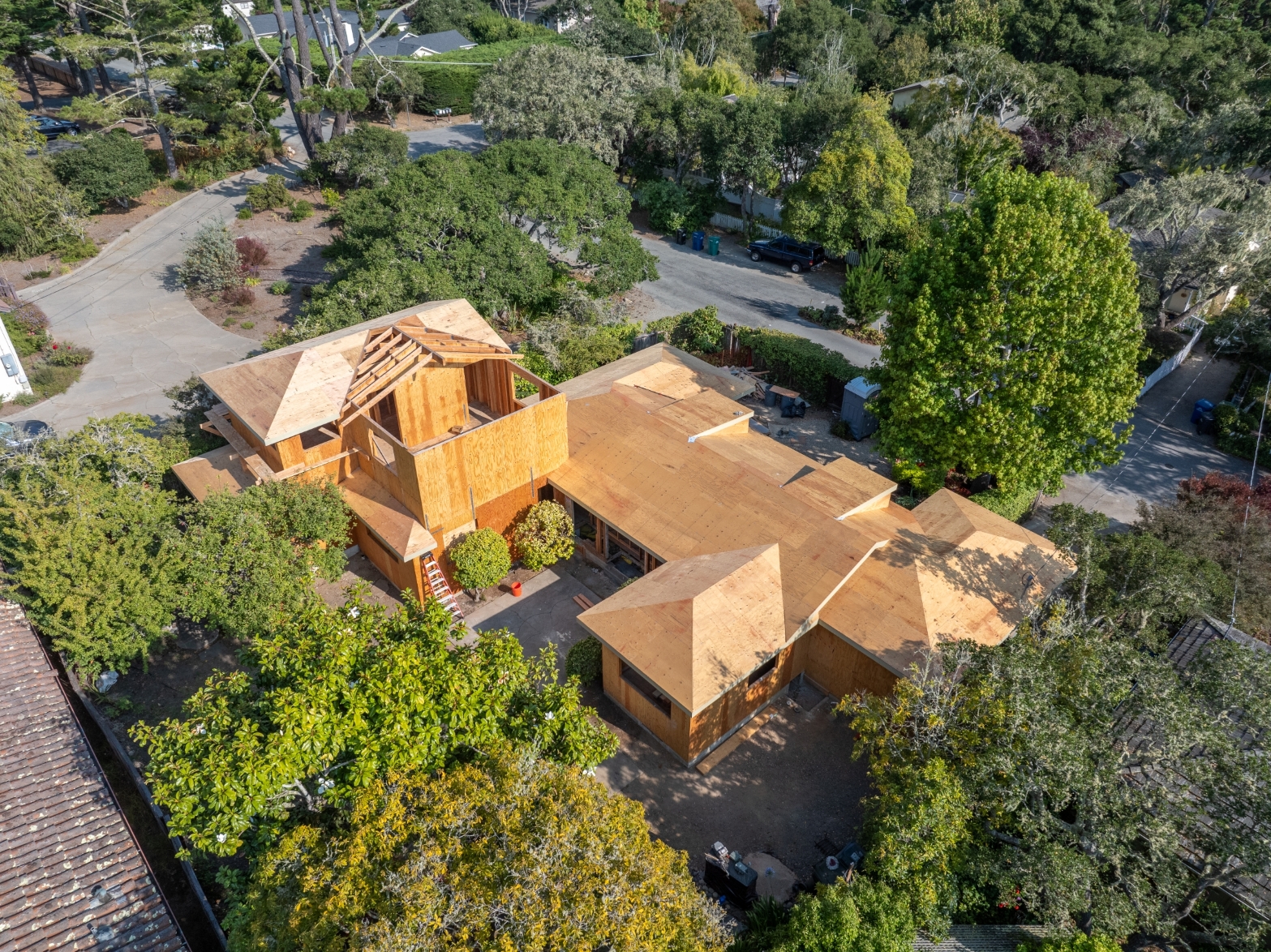

October is coming to an end, and on the Monterey Peninsula, our rainy season is right around the corner. From November through April, coastal storms bring much-needed rain, but they also put our homes to the test.
This year, there’s another reason to pay attention. Forecasters are tracking the potential for strong El Niño conditions this winter, which often bring wetter weather to parts of California. While heavy rainfall isn’t guaranteed for every community, the forecast is a good reminder of how unpredictable our winters can be.
We’ve seen the effects of major storms before. During the winter of 2022–2023, heavy rain overwhelmed drainage systems, knocked down trees, and caused widespread power outages. Carmel-by-the-Sea even declared a local emergency.
With more than 25 years of building and remodeling experience across the Monterey Peninsula, we’ve seen how small drainage problems and hidden leaks lead to costly repairs. Preparing your home before winter helps prevent these issues.
Start Outside: Make Sure Water Has Somewhere to Go
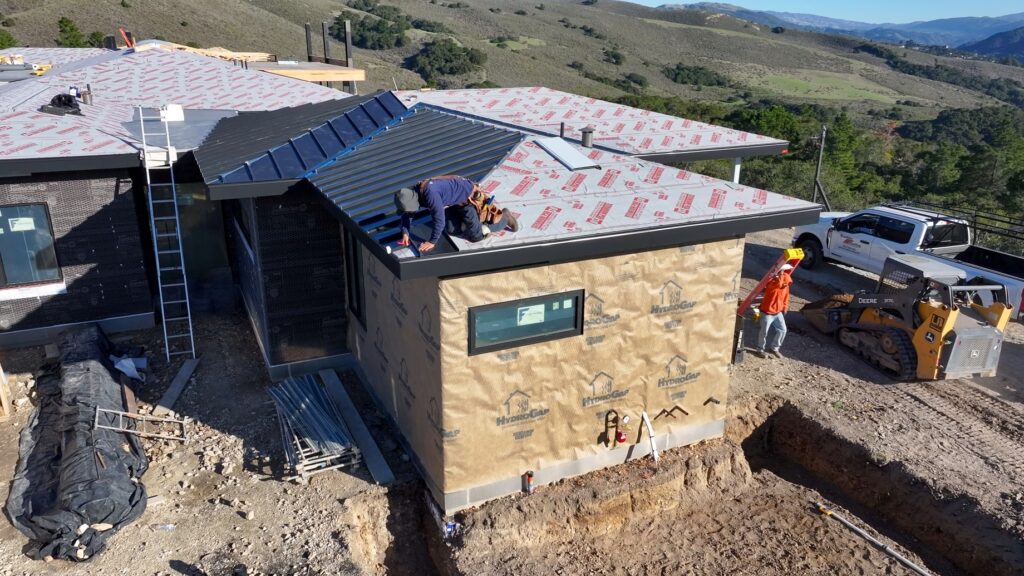
One of the first things we look at when building or remodeling a home is drainage. Rainwater should flow away from the house, not collect near the foundation. This is especially important on the Monterey Peninsula, where sloped lots and coastal groundwater make drainage more challenging.
Lewis Builders plans drainage based on each property’s needs. This includes grading, French drains, trench drains, and waterproofing when necessary.
Carmel-by-the-Sea also has rules for managing rainwater. In most cases, runoff should stay on the property rather than flow onto neighboring lots or into public storm drains without approval.
Before the rainy season, take some time to check the outside of your home:
- Clear leaves and debris from gutters and downspouts.
- Make sure rainwater flows away from your foundation.
- Check for pooling water around patios, driveways, and walkways.
- Look for blocked outdoor drains.
If water regularly collects in the same areas, your property might need a better drainage system.
Watch for Signs of Moisture Inside Your Home
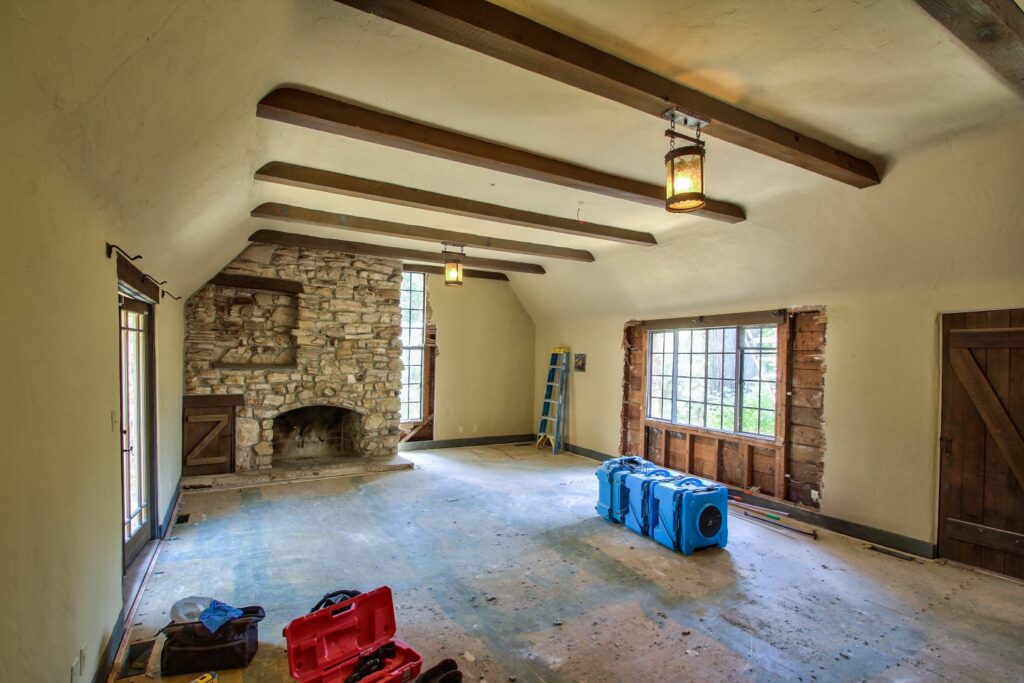

Not every water problem starts with a dramatic roof leak. Small issues, like moisture around a window or a stain on the ceiling, are often early warning signs.
On the coast, salt air and moisture gradually wear down exterior materials, window seals, and other parts of a home’s protective envelope. Older homes often need extra attention, especially those with original features.
Our Castle House project in Carmel-by-the-Sea is a good example. Built in 1925, this English Tudor home needed careful restoration of its original steel windows, doors, and stonework. Preserving its historic character meant understanding how those original materials functioned and addressing their condition thoughtfully.
Some common signs of moisture problems include:
- Water stains on walls or ceilings
- Peeling paint, warped wood, or sagging floors
- Condensation around windows
- Soft drywall or bulging surfaces
- Musty smells that don’t go away
If you notice these signs, identify the source before making repairs. The EPA recommends drying wet materials within 24 to 48 hours to help prevent mold. Before winter, inspect window seals, plumbing, and attic spaces for leaks.
For more tips, see our previous blog on water intrusion and mold prevention.
Building with Winter Weather in Mind
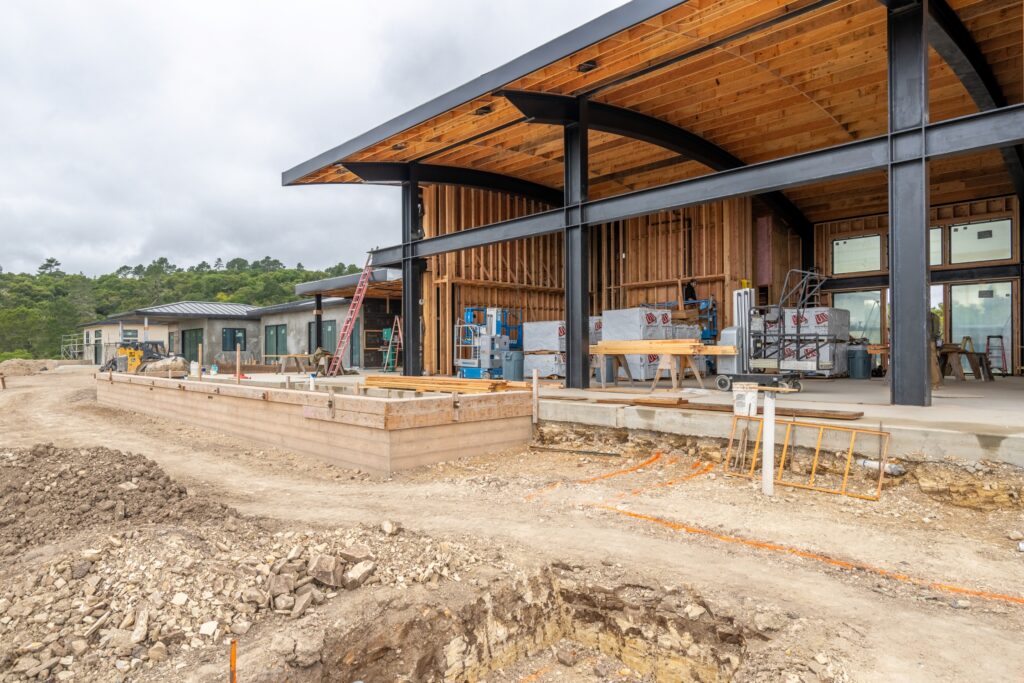
Regular maintenance helps protect your home, but long-term moisture protection starts with proper design and construction.
Beyond drainage, proper flashing, weather barriers, and ventilation help prevent moisture from entering and accumulating inside a home.
Building during the rainy season also requires extra care. Framing materials sometimes get wet before a home is fully enclosed. This isn’t always a concern, as long as the materials dry properly before the next stage of construction.
Lewis Builders takes steps to protect materials stored on-site, manage drainage during construction, and keep unfinished areas protected from rain.
Don’t Forget the Trees and Power Supply
Living on the Monterey Peninsula means sharing our properties with some remarkable trees. Oaks, redwoods, and cypress trees give our neighborhoods much of their character, but winter storms create challenges when strong winds meet saturated soil.
Before the next major storm, check for dead branches, damaged limbs, or trees leaning toward your home. A qualified arborist should inspect anything concerning. Fallen trees have previously caused road closures and power outages lasting for days in some Peninsula communities.
Keep in mind that many local trees are protected. As we discussed in our Carmel vacant lot feasibility study, removing or heavily pruning certain trees might require approval.
Before the rainy season, it’s also worth reviewing your homeowners insurance. The California Department of Insurance notes that standard policies often don’t cover flooding, mudslides, or debris flows. Contact your insurance provider to understand your coverage before damage becomes a concern.
Building for the Peninsula’s Climate
Every property on the Monterey Peninsula has its own challenges. A historic cottage surrounded by large trees faces different conditions than a modern home on a coastal hillside.
At Lewis Builders, we consider each property’s location, drainage, materials, and construction needs to create homes built for the coastal climate.
Whether you’re planning a remodel, building a new home, or addressing moisture issues, explore our portfolio or schedule a consultation to discuss your project.